A customer service automation platform combining SIP telephony, voice and text AI agents, a shared inbox, visual flows, outbound campaigns and analytics. Deployed on customer infrastructure and connected to business systems.
The brief
Bring telephony, voice AI, messaging and operator workflows into one platform, with configurable service flows and deployment on customer infrastructure.
My role
Platform architecture, backend development and infrastructure: routing, flows, integrations, access control and system observability.
Telephony and voice AI
- SIP trunks, extensions, inbound routes, IVR, queues, ring groups, conferences and voicemail.
- Streaming voice-agent conversations, interruption handling and handoff to an operator.
- A knowledge base, configurable agent tools and support for local or external AI models.
- A built-in WebRTC phone and permission-controlled call monitoring.
Messaging and team workflows
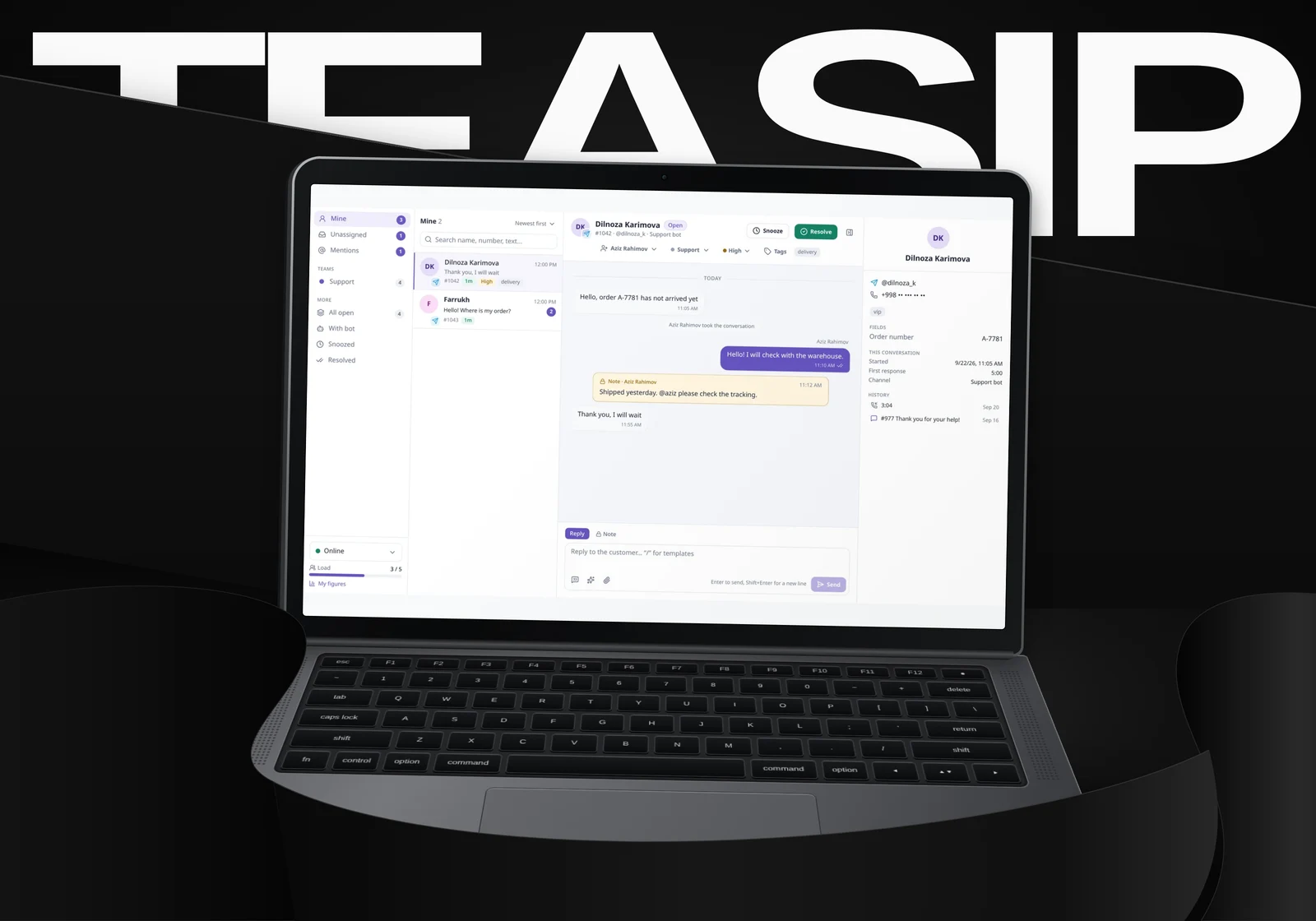
A shared inbox for Telegram Bot, Telegram Business, Telegram Account and website chat. Team assignment, customer profiles, conversation history, internal notes and response deadlines. A text AI agent runs inside a flow, while the operator assistant drafts replies for a person to review.
Visual flows and integrations
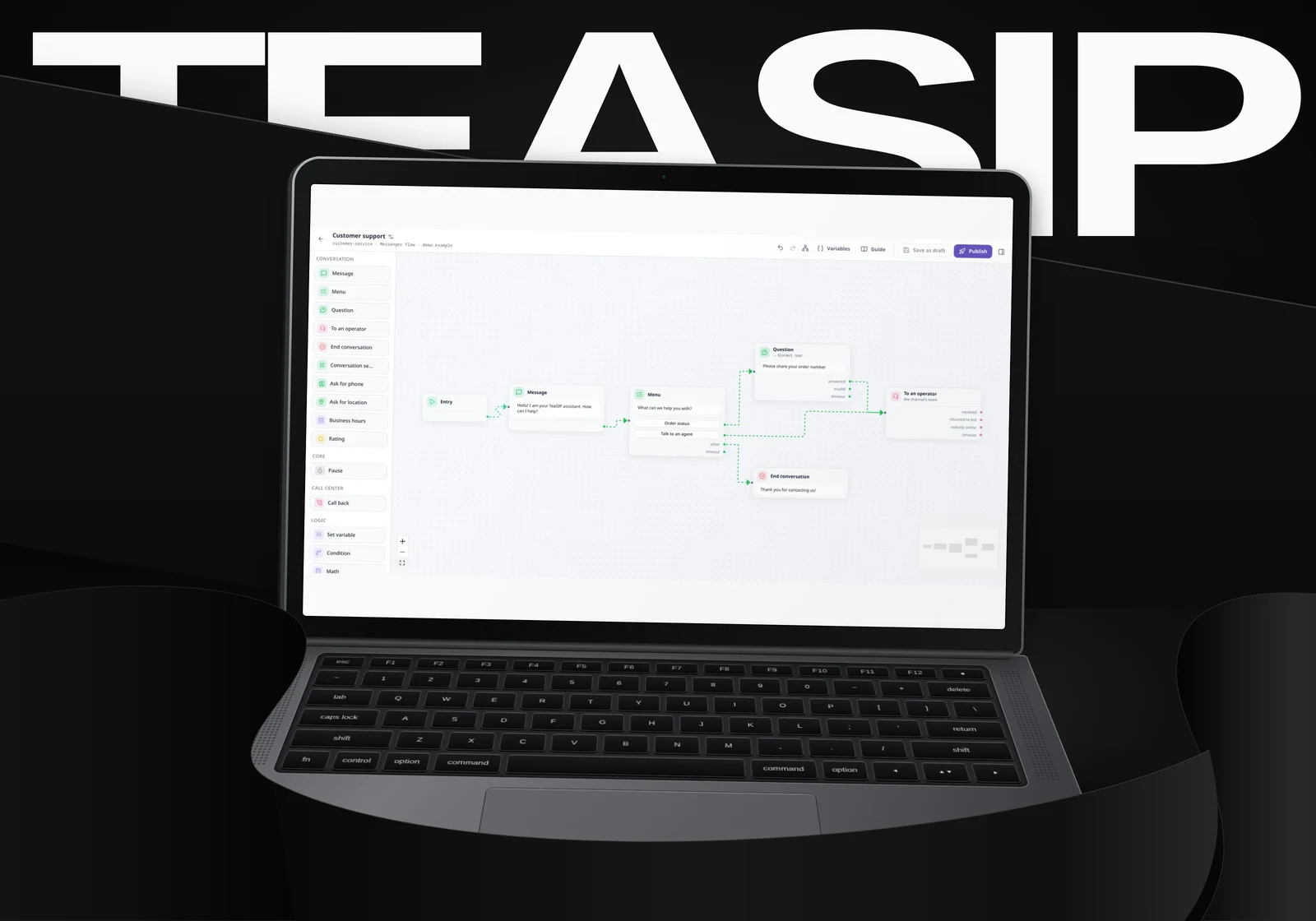
A visual editor for voice and messaging flows with drafts, pre-publication validation and version history. REST APIs, HTTP nodes, a tool catalogue and Node Studio connect business systems and extend service logic.
Outbound campaigns and analytics
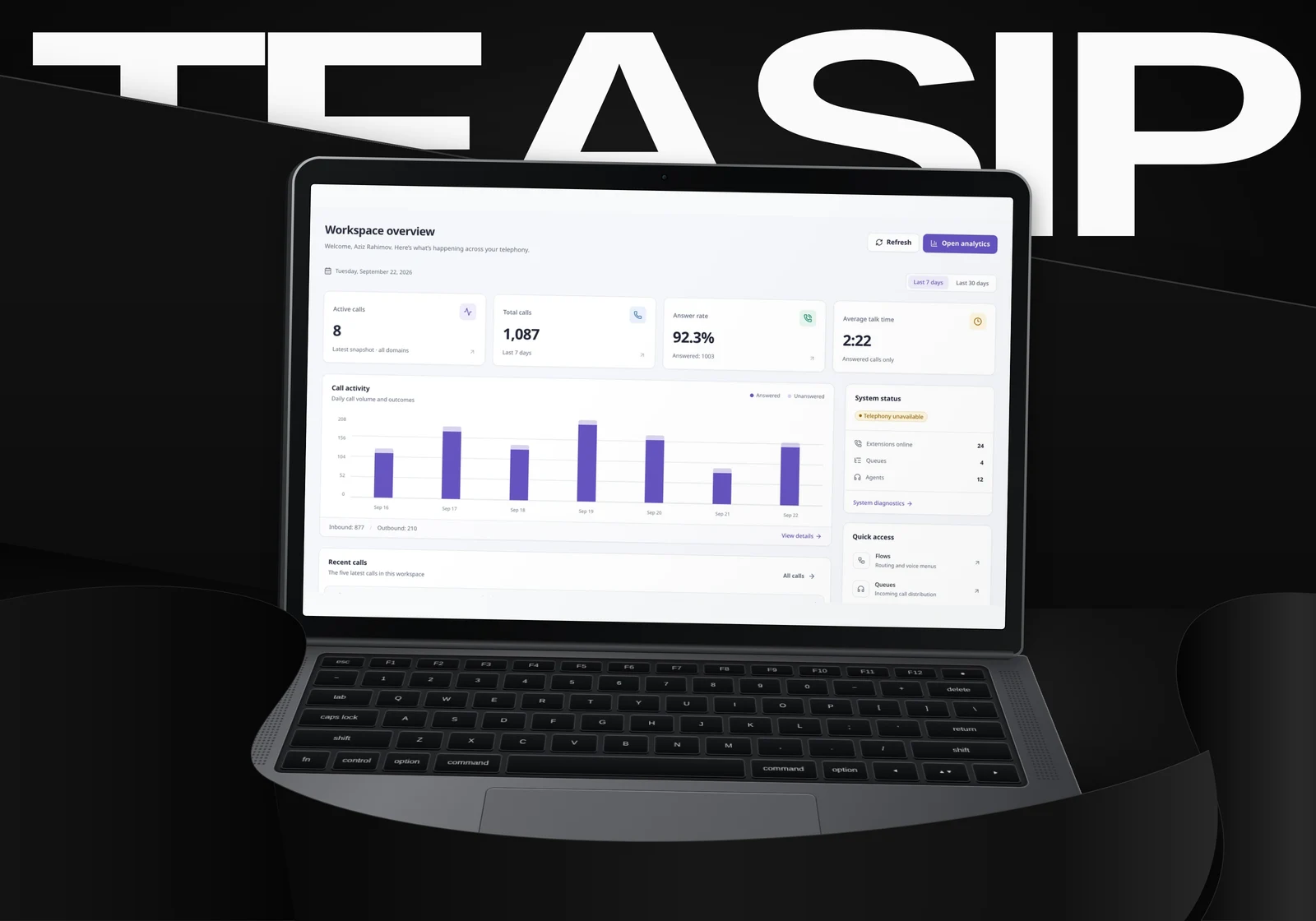
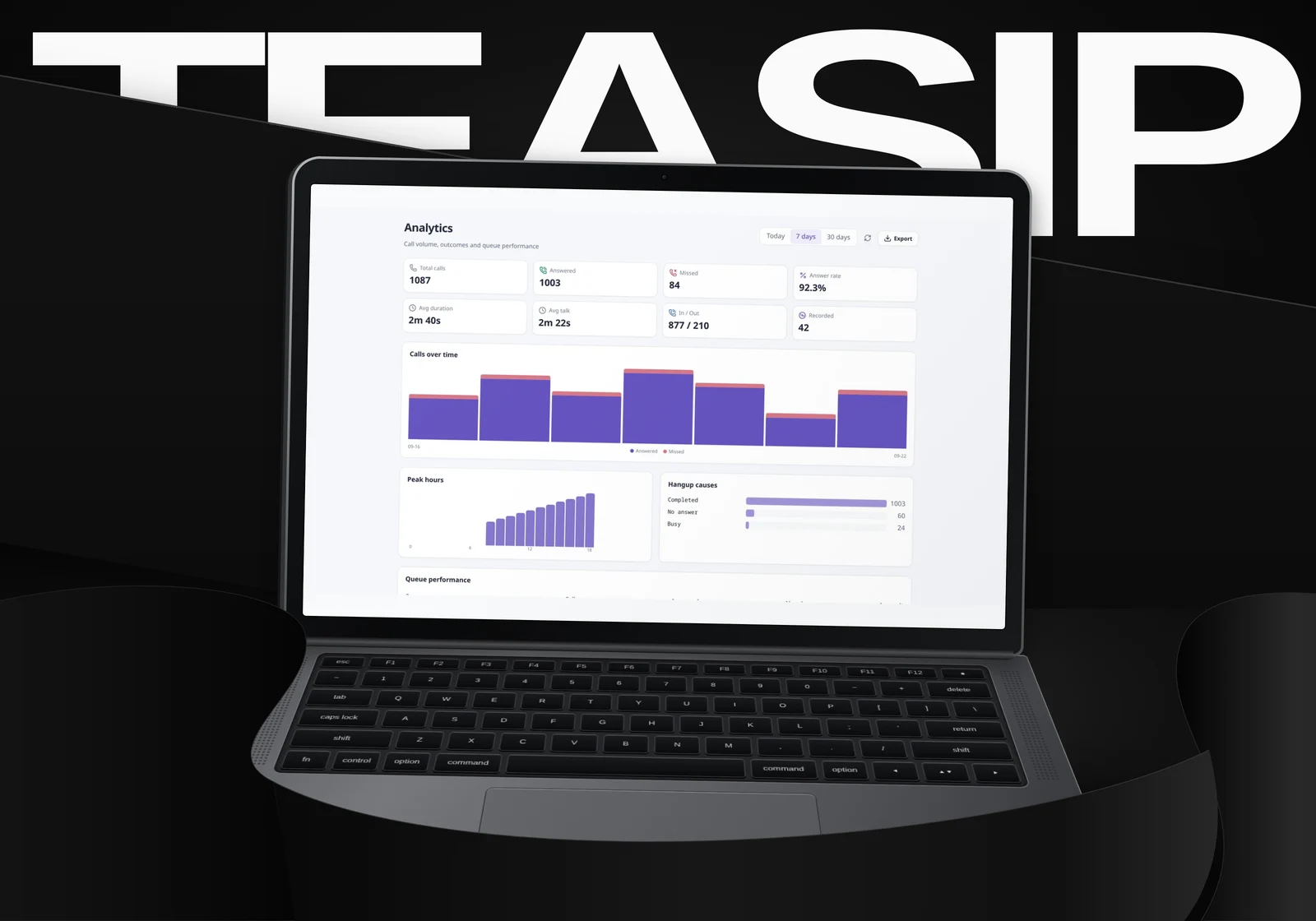
XLSX/CSV contact imports, schedules, retries and campaign pacing. Call analytics cover volume, answer rates, waiting and abandoned calls; separate chat reports track response and resolution times.
Deployment
Deployment on customer infrastructure with roles, domain separation and an audit trail. AI processing can run locally; external models, Telegram and the telephony provider are connected according to the project configuration.